

Human behaviour begins to make sense once the system driving it is understood.
Much of what we interpret as weakness, lack of discipline or flawed character is more accurately the predictable output of a biological, neurological and psychological system attempting to maintain stability.
From this perspective, meaningful change does not begin with judgement or motivation; it begins with understanding the architecture of the human system itself.
Modern self-development culture tends to focus on the idea of potential. People are encouraged to believe they possess untapped abilities waiting to be unlocked, and that with the right mindset, discipline or confidence they can step into the life they are capable of living. While this narrative can be motivating, it overlooks a more fundamental factor in how human systems actually function.
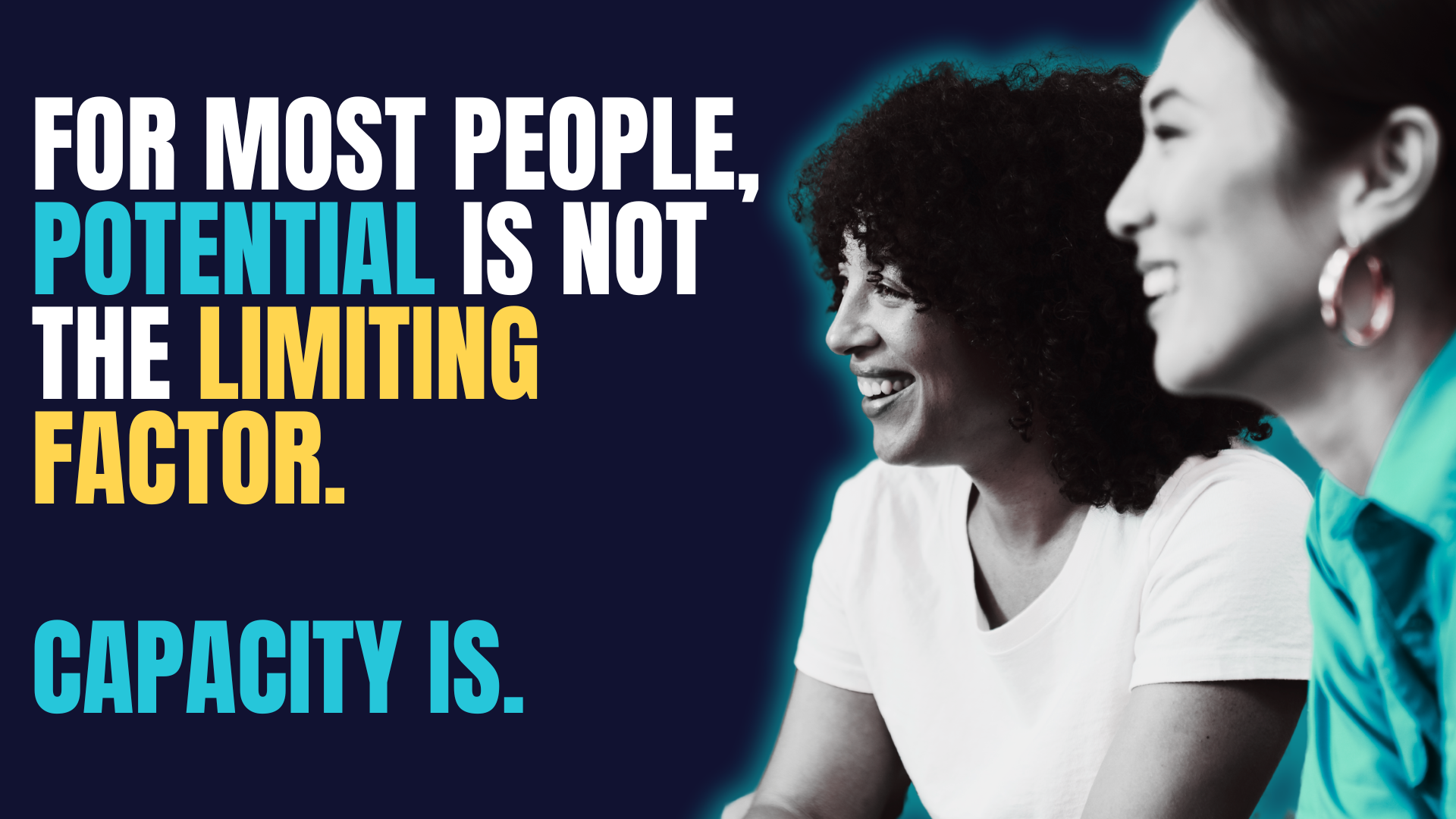
Potential refers to what a person could become under ideal conditions. Capacity refers to the internal conditions that determine what the human system can currently sustain, process and integrate. A person may possess enormous potential while simultaneously operating with very limited capacity.
When capacity is constrained - by chronic nervous system activation, protective identity structures or sustained psychological pressure - the system naturally narrows. Attention becomes selective, emotional tolerance decreases and behaviour becomes increasingly automatic. From the outside individuals may continue to appear capable and productive, yet internally the system may be operating very close to its threshold.
This is what we describe as Survival Intelligence: a mode of functioning organised around maintaining stability rather than expanding possibility.
At the centre of the Mental Wealth framework therefore lies a distinction between capacity contraction and capacity expansion. When the nervous system perceives threat or instability, capacity contracts and behaviour becomes increasingly protective. When regulation stabilises and internal coherence develops, capacity begins to expand. Perception widens, emotional processing deepens and individuals regain access to conscious choice in situations where they once reacted automatically.
Beneath these behavioural patterns sits what can be described as identity architecture - the network of beliefs, emotional associations, nervous system responses and neurological pathways that organise how a person experiences the world. Behaviour is simply the surface expression of this deeper architecture. When the architecture remains organised around protection, the system repeatedly recreates familiar patterns even when the individual consciously wishes to move beyond them.
The work of the Mental Wealth Revolution, therefore, focuses on understanding and upgrading this internal operating system. As awareness develops and the system gradually builds greater capacity, individuals become able to engage with life from a broader range of states. Decisions become less reactive, creativity returns, and the individual is able to participate in their life with greater clarity, stability and agency.
